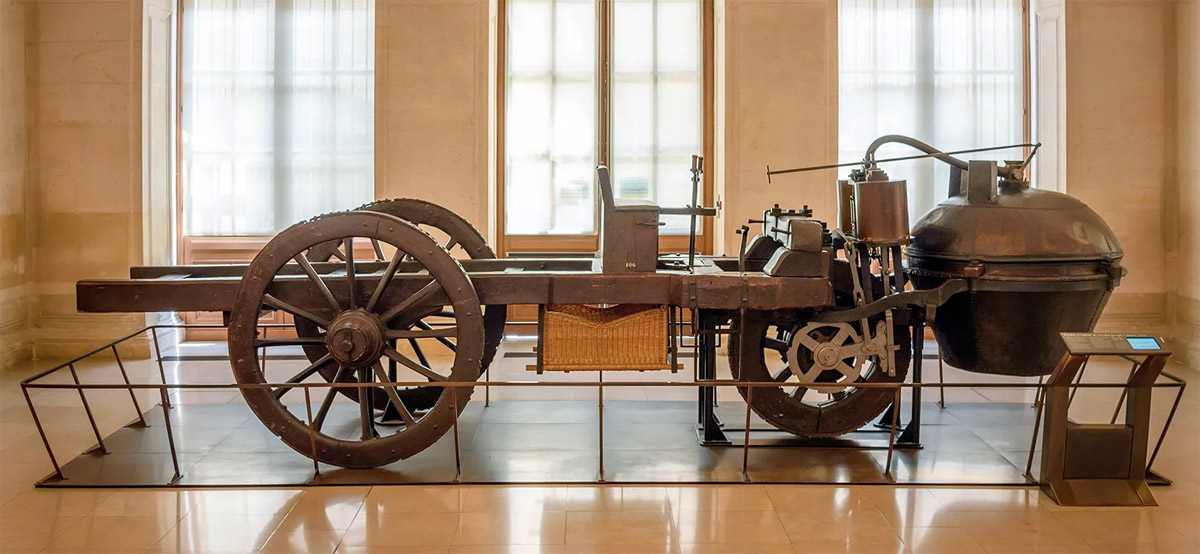
255 лет тому назад, 23 октября 1769 года, впервые отправился в путь первый в мире самоходный экипаж с механическим (паровым) двигателем, созданный французским военным инженером Николя-Жозефом Кюньо. Интересно, что произошло это задолго до того как Джеймс Уатт в 1782 году разработал и запатентовал свою универсальную паровую машину.
«Паровая телега» Кюньо была военным грузовиком, предназначенным для перевозки пушечных стволов и ядер. Стволы подвешивались на канатах под платформой, а ядра и другие грузы складывались на нее. К сожалению, несовершенство машины, опередившей свое время, как минимум, на полсотни лет, не позволило ей вытеснить живую тягловую силу.
Но, как показывает современная реконструкция, система Кюньо была вполне работоспособна, хотя и довольно медлительна: максимальная скорость по ровной дороге — всего 5 км/ч. Ну, а о проходимости, вообще, говорить не приходится. При съезде с мостовой переднее колесо моментально «утонуло» бы в грязи или мягком грунте.
Кстати, наверное, не все знают, что французское слово «шофер» изначально означало «кочегар», поскольку шоферам первых паровых автомобилей приходилось перед отправкой в путь разжигать топки своих экипажей, да и по ходу движения — подбрасывать уголек или дровишки.
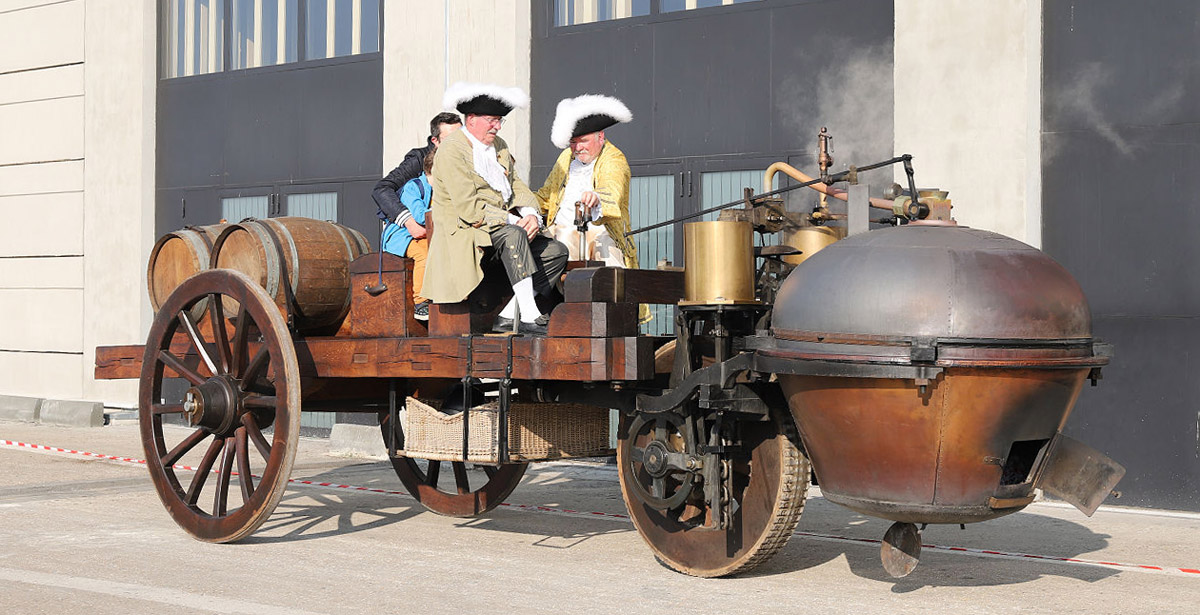
1.Машина Кюньо в парижском музее истории техники. Это был первый в мире трицикл с рулевым ведущим колесом, причем колесо поворачивалось вместе с силовым агрегатом.
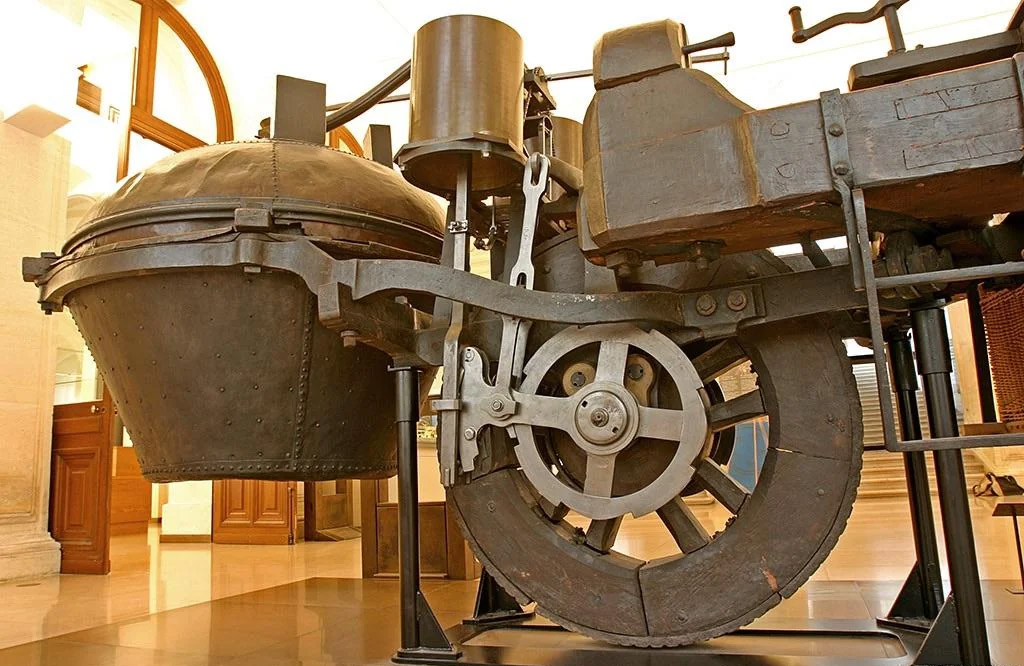
2.Двухцилиндровый паровой двмгатель и храповая передача на колесо крупным планом.
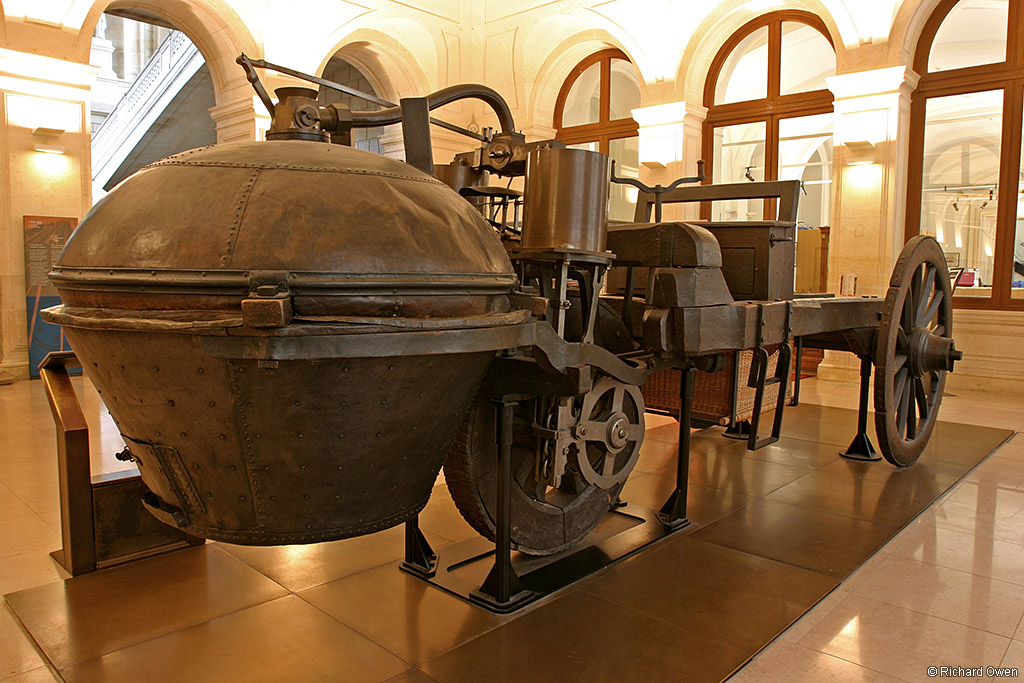
3.Котел, совмещенный с топкой, работавшей на дровах.
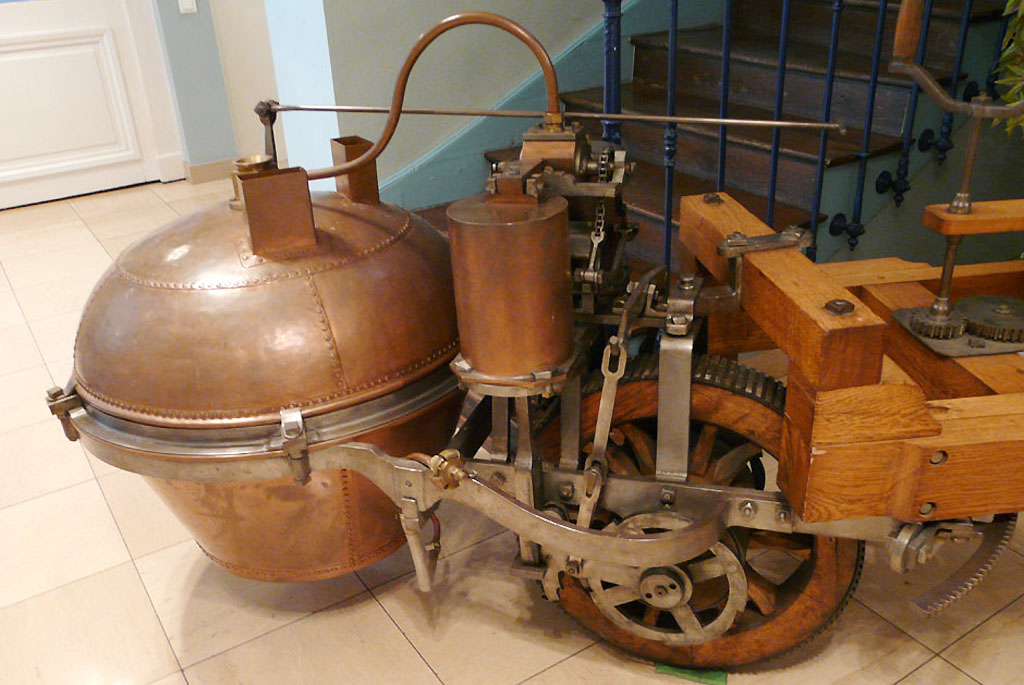
4.Музейный макет-новодел.
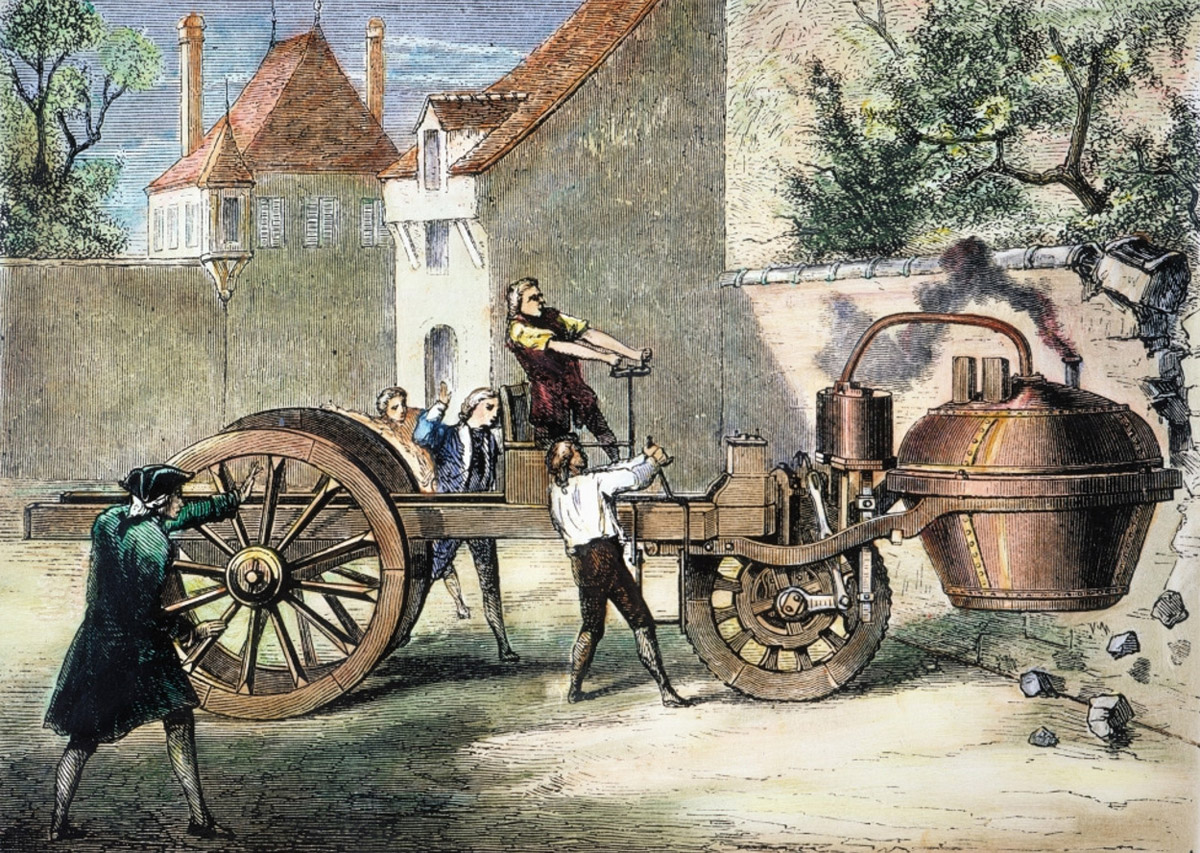
5.Испытания «паровой телеги» завершились аварией. Несмотря на низкую скорость, водитель не справился с управлением и протаранил котлом каменную стену. Впрочем, железная рама котла оказалась более прочной.
Мы используем файлы cookie на нашем веб-сайте, чтобы предоставить вам наиболее актуальный опыт, запоминая ваши предпочтения и повторные посещения. Нажимая «Принять все», вы соглашаетесь на использование ВСЕХ файлов cookie. Однако вы можете посетить «Настройки файлов cookie», чтобы предоставить контролируемое согласие.
This website uses cookies to improve your experience while you navigate through the website. Out of these, the cookies that are categorized as necessary are stored on your browser as they are essential for the working of basic functionalities of the website. We also use third-party cookies that help us analyze and understand how you use this website. These cookies will be stored in your browser only with your consent. You also have the option to opt-out of these cookies. But opting out of some of these cookies may affect your browsing experience.
Necessary cookies are absolutely essential for the website to function properly. These cookies ensure basic functionalities and security features of the website, anonymously.
Cookie
Duration
Description
cookielawinfo-checkbox-analytics
11 months
This cookie is set by GDPR Cookie Consent plugin. The cookie is used to store the user consent for the cookies in the category "Analytics".
cookielawinfo-checkbox-functional
11 months
The cookie is set by GDPR cookie consent to record the user consent for the cookies in the category "Functional".
cookielawinfo-checkbox-necessary
11 months
This cookie is set by GDPR Cookie Consent plugin. The cookies is used to store the user consent for the cookies in the category "Necessary".
cookielawinfo-checkbox-others
11 months
This cookie is set by GDPR Cookie Consent plugin. The cookie is used to store the user consent for the cookies in the category "Other.
cookielawinfo-checkbox-performance
11 months
This cookie is set by GDPR Cookie Consent plugin. The cookie is used to store the user consent for the cookies in the category "Performance".
viewed_cookie_policy
11 months
The cookie is set by the GDPR Cookie Consent plugin and is used to store whether or not user has consented to the use of cookies. It does not store any personal data.
Functional cookies help to perform certain functionalities like sharing the content of the website on social media platforms, collect feedbacks, and other third-party features.
Performance cookies are used to understand and analyze the key performance indexes of the website which helps in delivering a better user experience for the visitors.
Analytical cookies are used to understand how visitors interact with the website. These cookies help provide information on metrics the number of visitors, bounce rate, traffic source, etc.
Advertisement cookies are used to provide visitors with relevant ads and marketing campaigns. These cookies track visitors across websites and collect information to provide customized ads.